
GST wholesale goods invoice
Free PDF, Word and Excel template for quantity based goods supply with a delivery reference. Filled sample, checks and local editing.
Download or edit this sample
Edit document details
Choose your style
Excel download is an editable text worksheet, not an automatic payroll or tax calculator.What each part means
Quantity and unit
Use one consistent sale unit across the order, price and invoiced quantity. The sample uses 50 pieces; changing the unit to cartons requires reviewing the quantity and unit price rather than editing one label alone.
Goods classification
Replace the demonstration description with the real item and verify its HSN and applicable rate. The illustrative tax amounts do not establish how a specific product should be classified.
Delivery link
Record the actual delivery address and dispatch reference separately from the buyer’s billing details. Check the quantity actually being invoiced against order and supply records, including partial deliveries and backorders.
Quantity based goods supply with a delivery reference
Wholesale billing needs quantity and unit information that can be compared with the accepted order and delivery. This example uses a single goods line so the relationship between pieces, pre-tax unit price and taxable value is easy to check. It suits a simple quantity-based transaction after the actual product classification and tax treatment have been reviewed. The phrase demonstration goods deliberately avoids assigning an unsupported HSN or product rate.
How the filled example works
Fifty pieces at INR 800 before tax produce INR 40,000 taxable value. The manually entered demonstration adds INR 3,600 CGST and INR 3,600 SGST, resulting in INR 47,200. The purchase-order reference identifies the commercial order, while the dispatch reference is left for an actual delivery record. A billing address and a delivery address can differ, so both remain separately identified fields.
Prepare the supporting record
Collect the accepted purchase order, actual SKU descriptions, dispatched quantities and customer details. Confirm whether the sale unit is a piece, box, carton or weight unit and whether the price uses that same unit. If a carton contains ten pieces, mixing a carton quantity with a piece price can multiply or divide the charge incorrectly. Match the invoice quantity with the actual invoiced supply, not merely the quantity initially ordered.
Resolve this scenario before issuing
Resolve shortages, backorders and separately billed deliveries before issuing. If only 40 of the 50 ordered pieces are supplied and the invoice covers that delivery, use the appropriate actual quantity and description. Do not change a dispatch record to match a copied sample. Check the actual HSN, rate, place of supply, invoice particulars and any transport or e-invoice requirements independently of this layout.
How to edit and share the document
Word is useful for adding a second goods line or a longer delivery address. Excel records the quantity, unit and entered tax amounts as editable fields; it does not maintain inventory or calculate tax classification. Multiply the actual quantity by the agreed before-tax price, then verify the tax and final amount separately. Review the PDF, replace every identifier placeholder and preserve the purchase-order and delivery evidence for reconciliation.
Invoice identity and tax review
A GST invoice requires more than a correct total. Review supplier and customer identity, the invoice date and financial-year number, the supply description, HSN or SAC, quantity where relevant, taxable value, tax rate and tax amount. State identifiers and shipping addresses help explain the transaction, but they do not independently determine its tax treatment. All GSTINs remain placeholders in these examples. Use the applicable official rules and your actual transaction records when preparing an issued invoice.
Review this scenario
- Match the invoiced quantity with the actual supply.
- Use the same unit in the quantity and price fields.
- Verify product description, HSN and tax rate.
- Confirm billing and delivery details separately.
- Review place of supply and any applicable transport or IRN requirements.
- Reproduce the quantity multiplication and tax total before issue.
Questions about this format
Can I change pieces to cartons?
Yes, when that is the actual invoicing unit. Confirm the number of cartons, contents where needed and agreed price per carton, then update the taxable value and tax amounts. Simply renaming the unit would not preserve the same calculation.
Does this invoice replace a delivery record?
The invoice can reference the actual dispatch, but it does not confirm that goods were delivered or replace any required supporting documentation. Keep the order, supply and transport records appropriate to the actual transaction.
Check before you use it
All tax rates and amounts here are illustrative arithmetic, not classification advice. Verify the applicable rate, place of supply, invoice particulars and any IRN/QR requirements before issuing.
- Replace every sample or bracketed field with accurate information.
- Check dates, amounts, identifiers and the intended recipient’s requirements.
- Open the exported file and obtain any required employer, landlord or legal approval.
Questions about this download
Can I edit it in Word?
Yes. DOCX contains editable text. Customized PDF exports preserve the layout as page images; direct English sample PDFs contain searchable text. Neither is a digitally signed document.
Is my entered information uploaded?
Document generation happens in this browser. Optional consented analytics measures actions, never document contents.
Official references
CBIC GST invoice rules — tax invoice particulars and related documents
Guidance checked: 30 September 2026
Prepared by Feroz Sheikh · 30 September 2026
Related templates
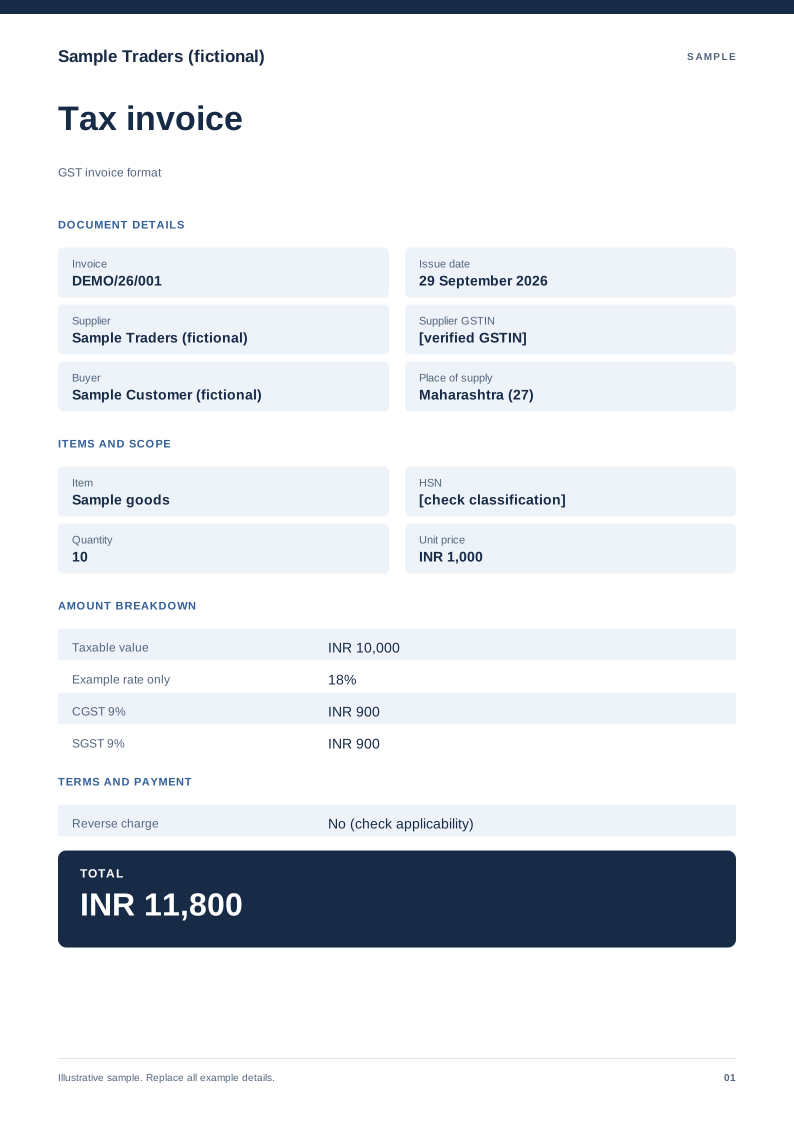 Preview & customize ↗
GST invoice format
A domestic tax-invoice sample with supplier details, HSN/SAC and tax split. Free PDF, Word and Excel downloads. Edit a blank or filled sample on your device.
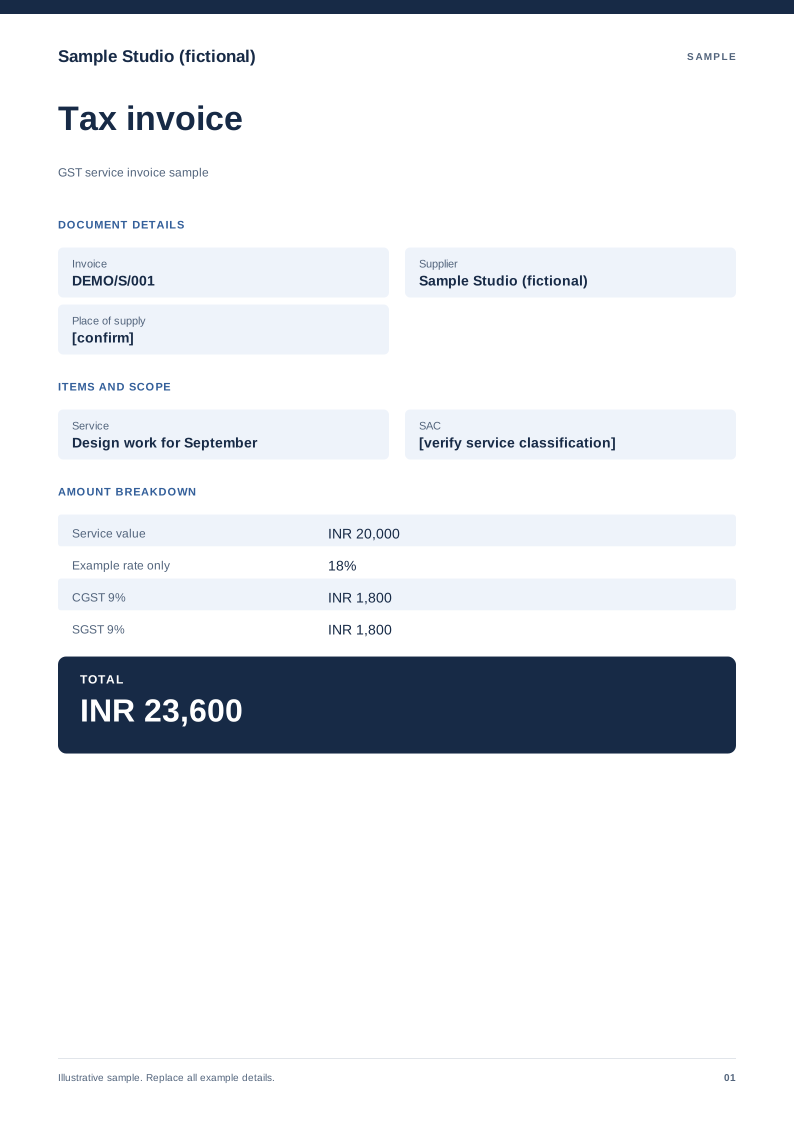 Preview & customize ↗
GST service invoice sample
A service-billing sample with SAC, service period and an explicit tax treatment. Free PDF, Word and Excel downloads. Edit a blank or filled sample on your device.
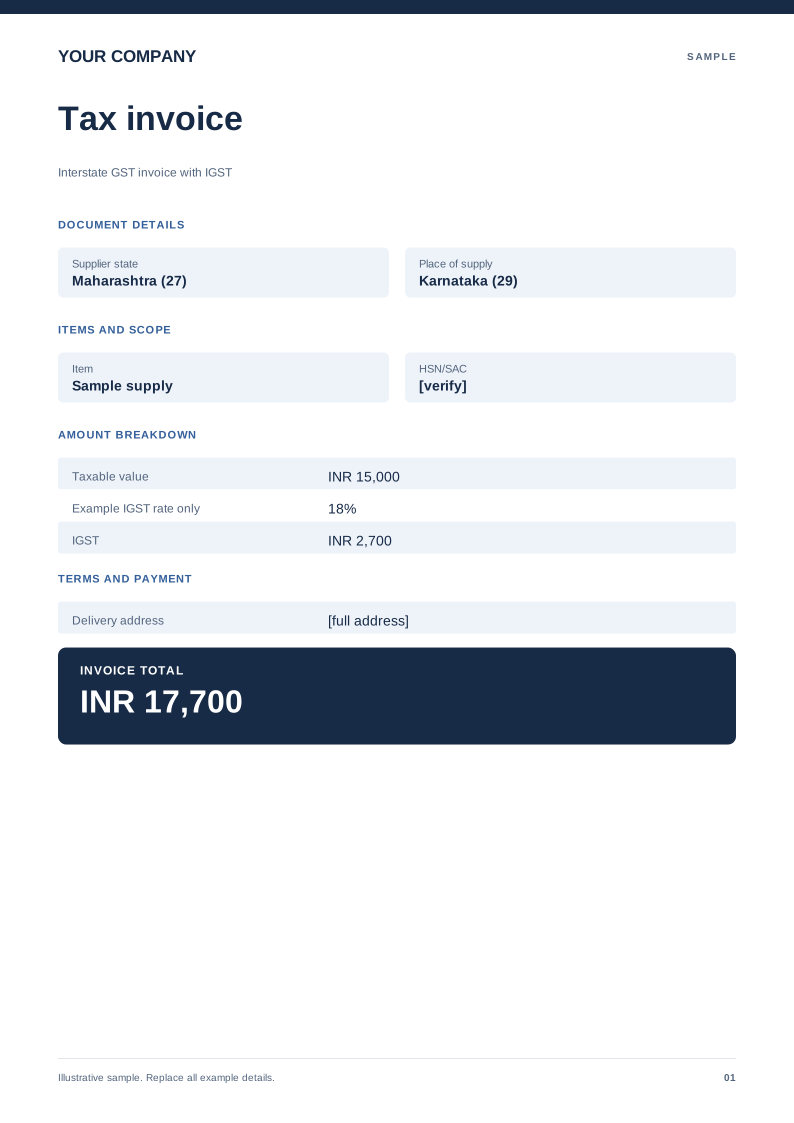 Preview & customize ↗
Interstate GST invoice with IGST
An example showing a single IGST line instead of CGST and SGST. Free PDF, Word and Excel downloads. Edit a blank or filled sample on your device.
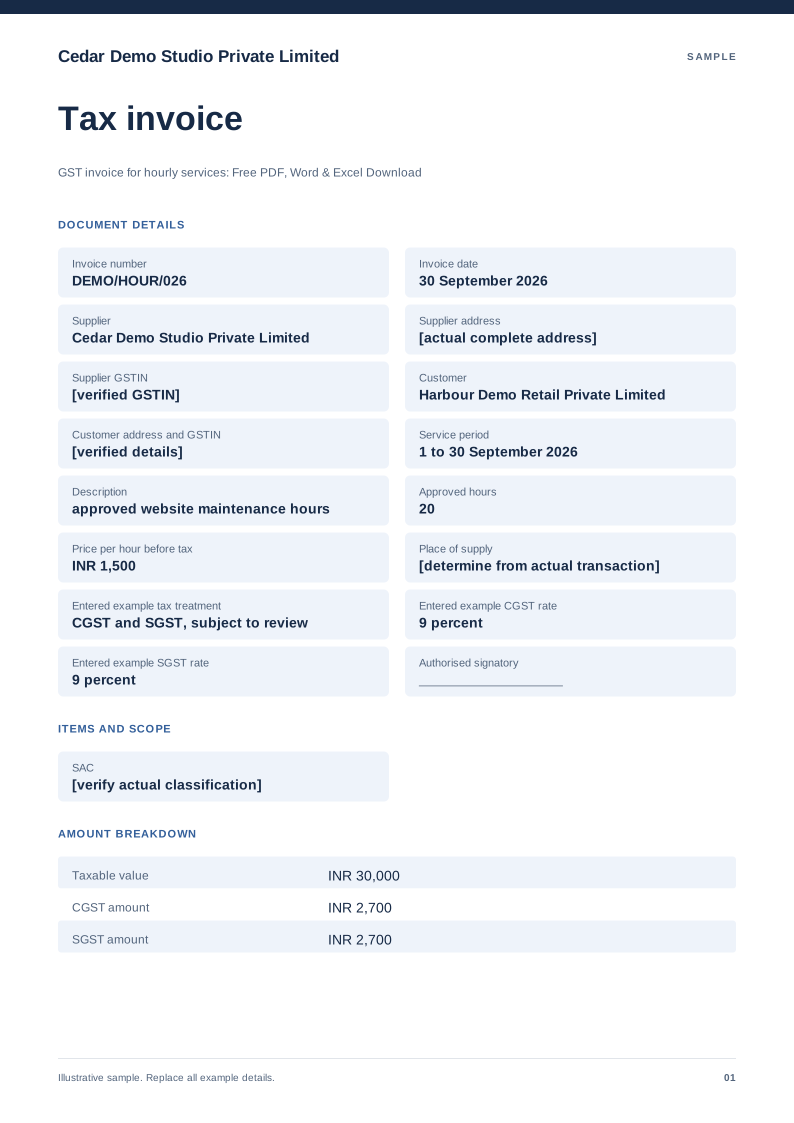 Preview & customize ↗
GST invoice for hourly services
Free PDF, Word and Excel template for approved service hours billed for one identified work period. Filled sample, checks and local editing.
 Preview & customize ↗
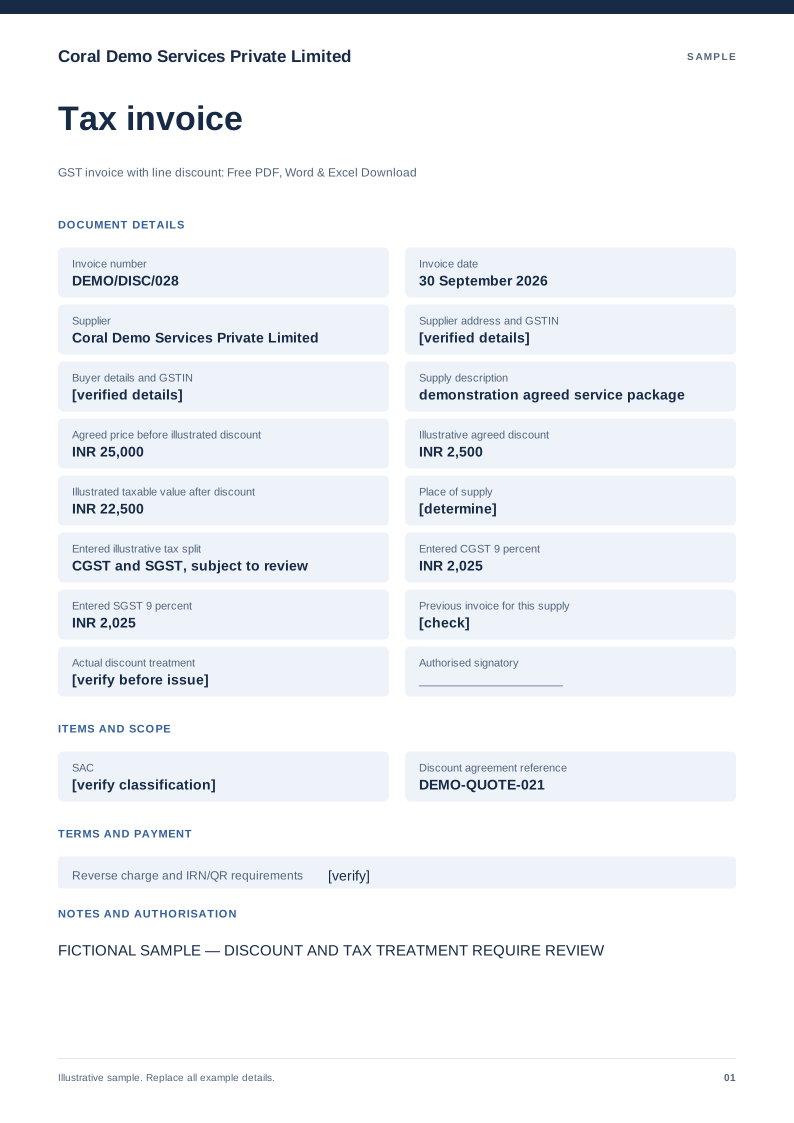
GST invoice with line discount
Free PDF, Word and Excel template for invoice showing an agreed discount before entered tax. Filled sample, checks and local editing.
 Preview & customize ↗
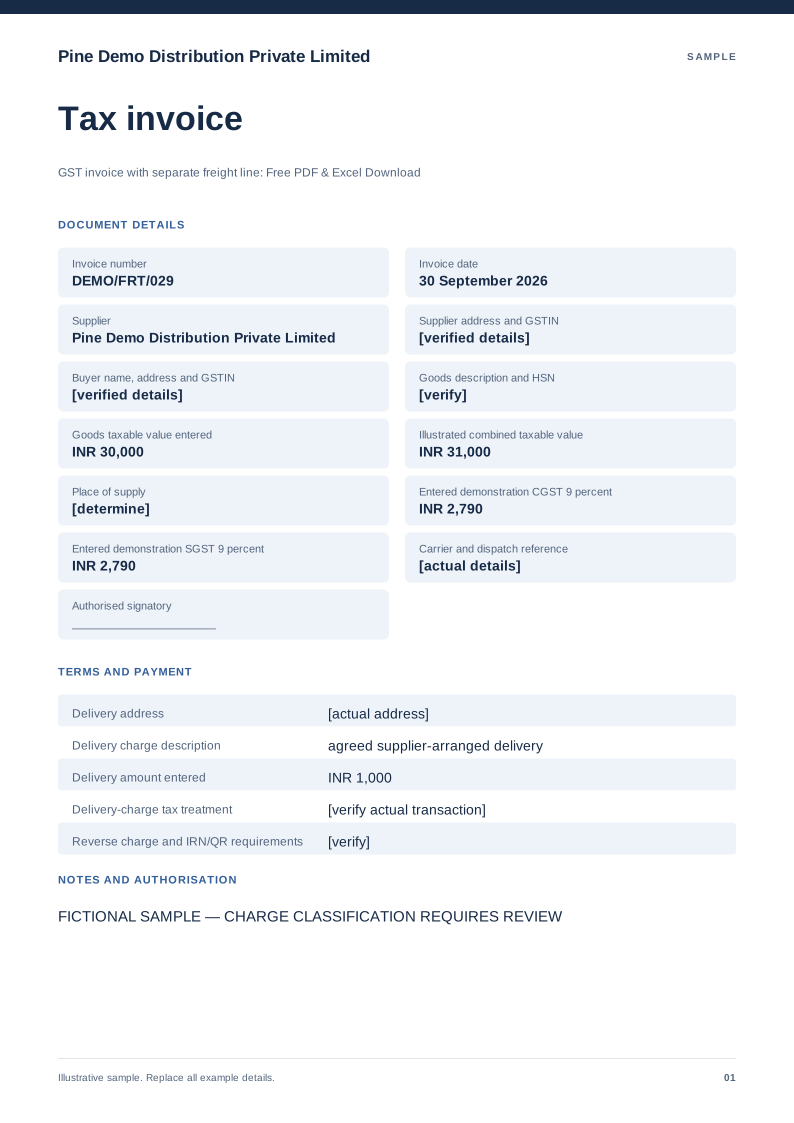
GST invoice with separate freight line
Free PDF, Word and Excel template for goods invoice displaying a separately described delivery charge. Filled sample, checks and local editing.
 Preview & customize ↗
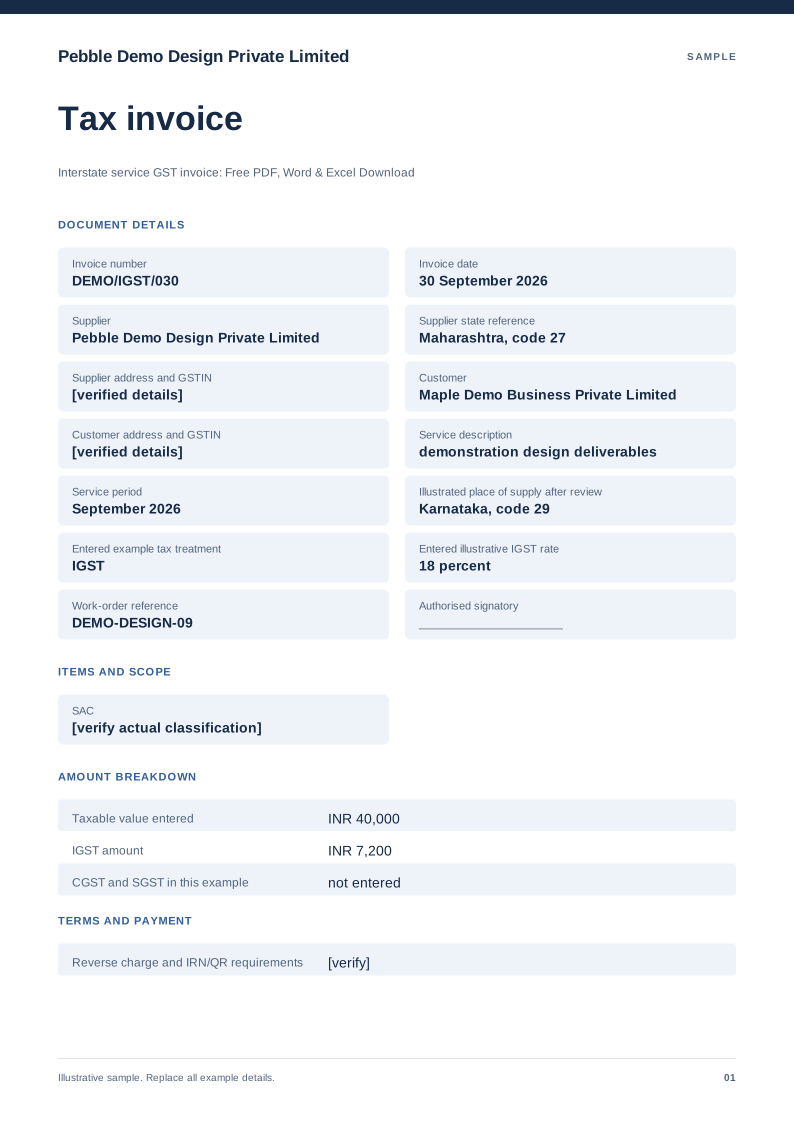
Interstate service GST invoice
Free PDF, Word and Excel template for service billing with a manually reviewed igst example. Filled sample, checks and local editing.
 Preview & customize ↗
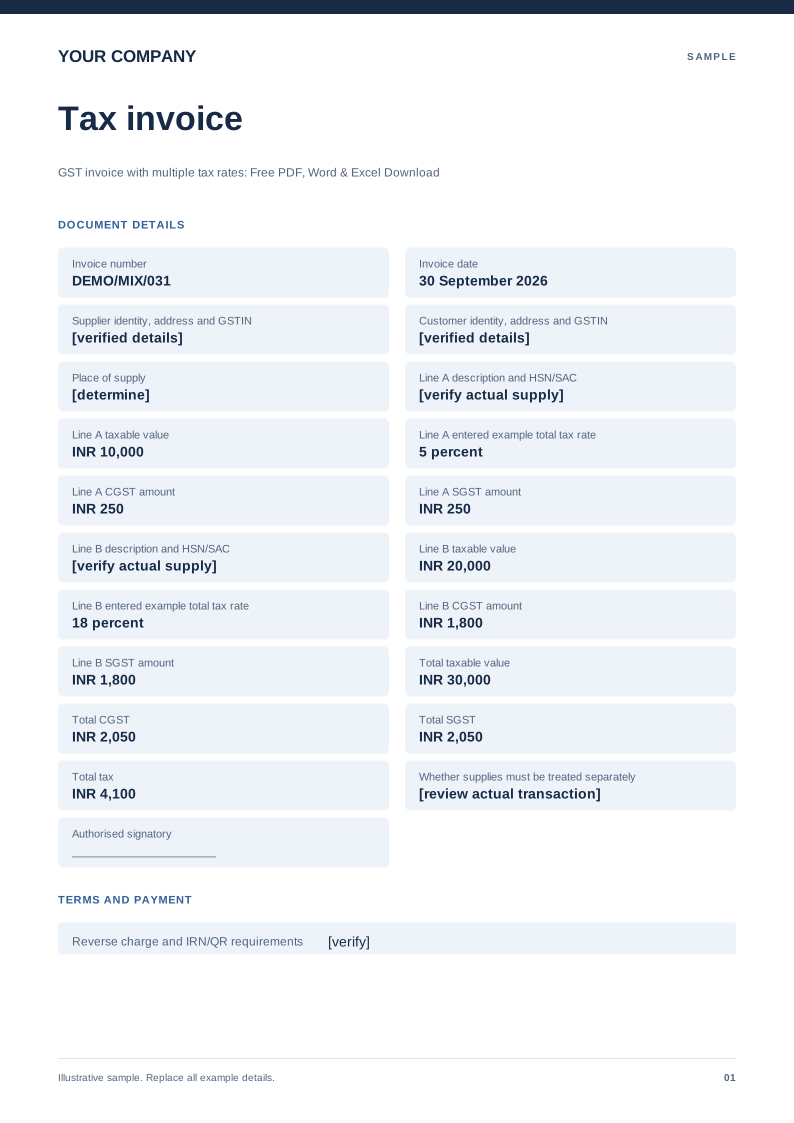
GST invoice with multiple tax rates
Free PDF, Word and Excel template for separate supply lines carrying reviewed different entered rates. Filled sample, checks and local editing.
 Preview & customize ↗
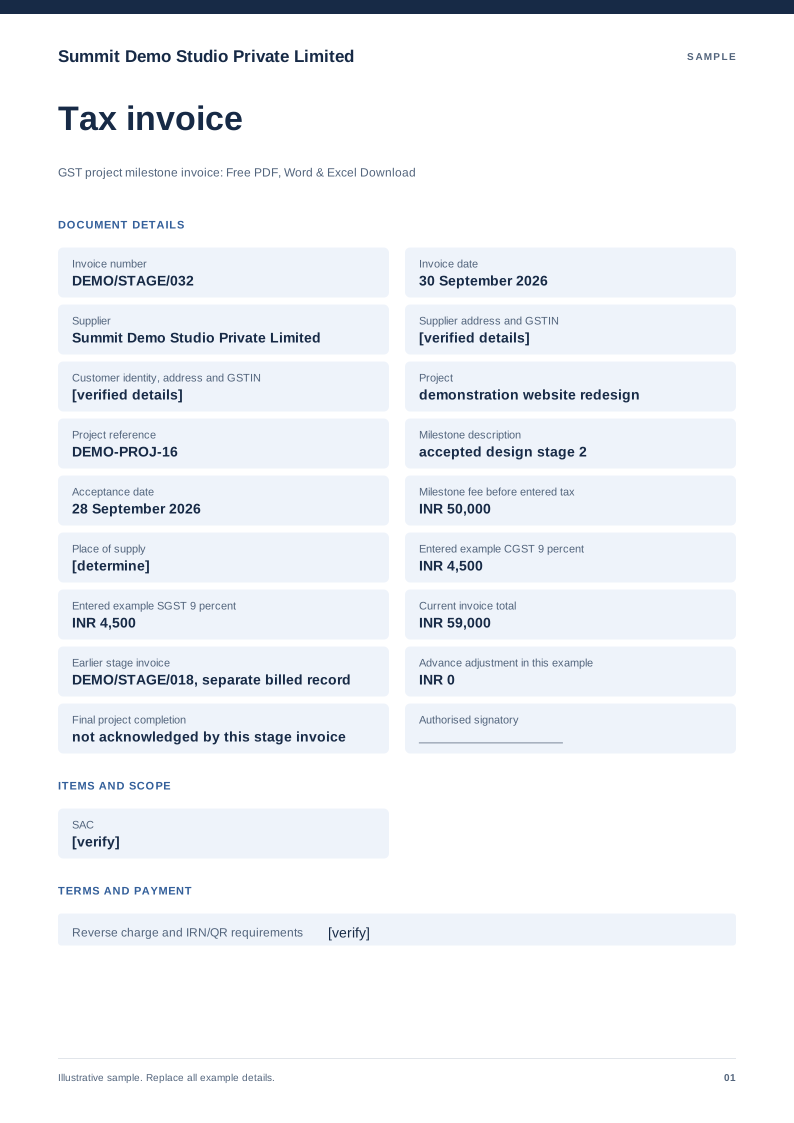
GST project milestone invoice
Free PDF, Word and Excel template for approved project stage billed with earlier invoices identified. Filled sample, checks and local editing.
 Preview & customize ↗
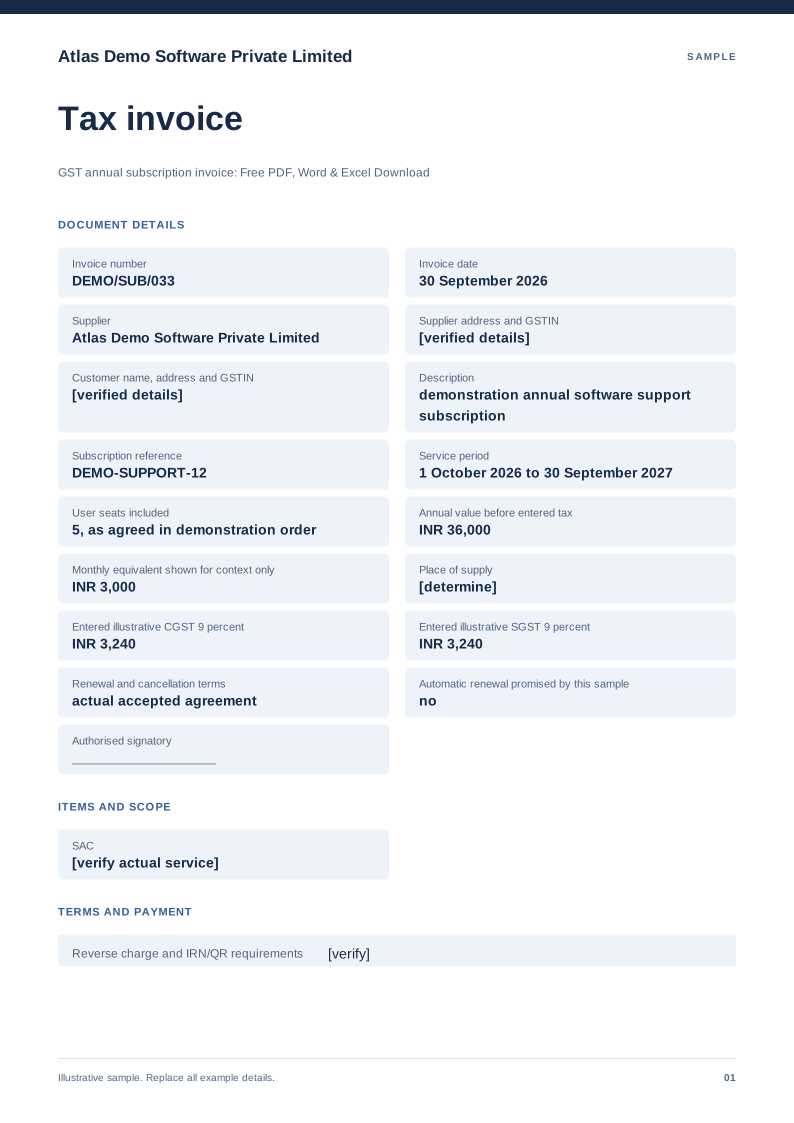
GST annual subscription invoice
Free PDF, Word and Excel template for a defined service subscription period billed in one charge. Filled sample, checks and local editing.